Overview
The Federal Bureau of Investigation (FBI) describes itself as an intelligence-driven and threat-focused national security organization with both intelligence and law enforcement responsibilities. The agency states that its mission is to protect the American people and uphold the Constitution of the United States, and that it is the nation's lead federal law enforcement agency for investigating and preventing domestic and international terrorism.[1][2][1]
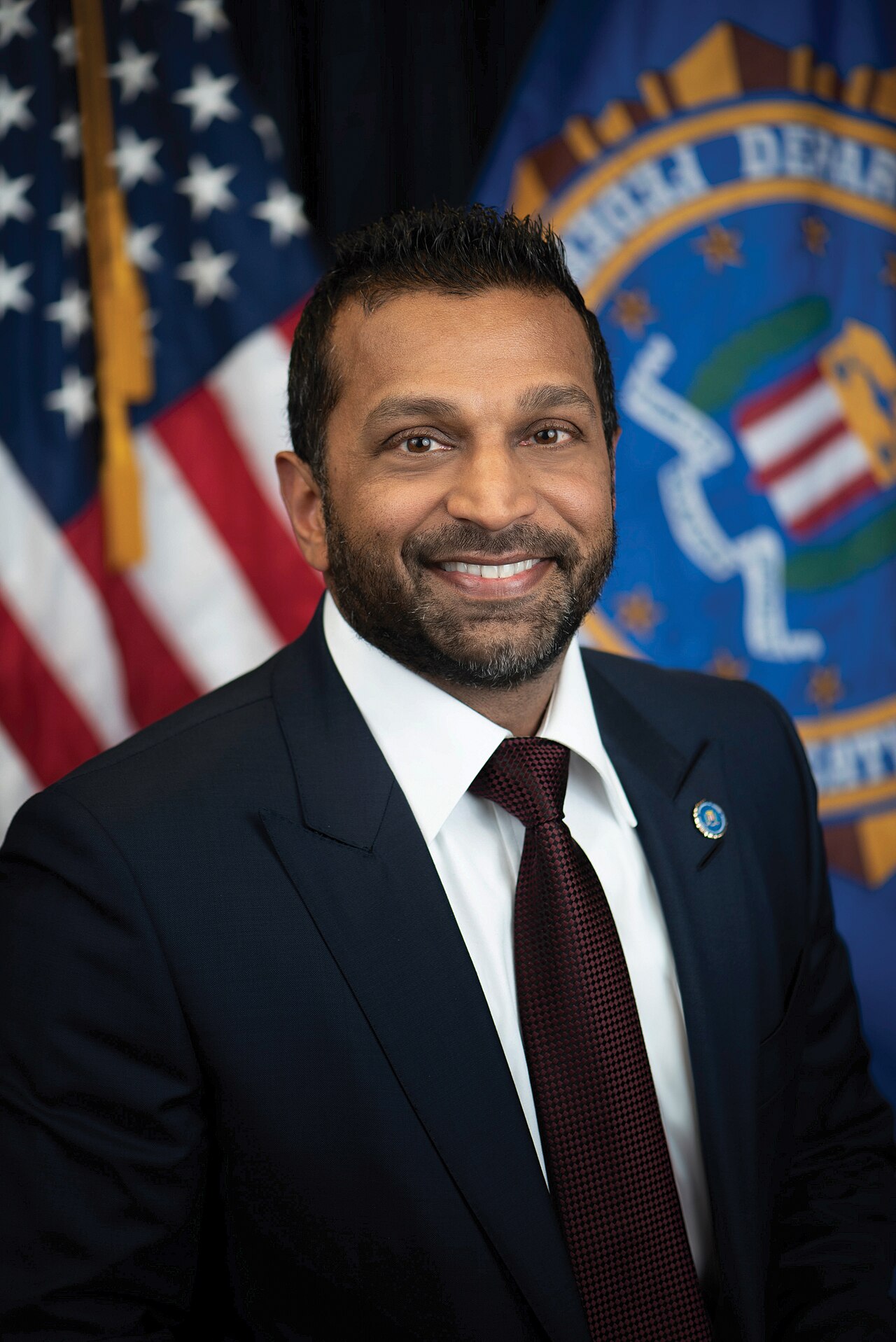
According to the FBI, it is headquartered in Washington, D.C., and is led by a Director who is appointed by the president and confirmed by the Senate for a term not to exceed 10 years. The FBI website names Kash Patel as the current Director. The agency states that its activities are scrutinized by Congress, the U.S. Department of Justice and the Director of National Intelligence.[1]
The FBI states that it employs approximately 38,000 people. Its own pages give different office counts: the frequently asked questions page says headquarters supports 55 field offices and more than 350 resident agencies, while the mission page lists 56 field offices and about 50 resident agencies. Both describe more than 60 offices abroad; the mission page says these are in U.S. embassies.[1][2]
History
This section draws on the FBI's own historical publications; it records how the agency describes its past and does not yet include independent historical accounts. According to the FBI history, Congress banned the loan of Secret Service operatives to other federal departments in May 1908, which led Attorney General Charles J. Bonaparte to form his own investigators. The FBI's accounts of that first force differ: its narrative history says Bonaparte hired nine former Secret Service investigators and combined them with 25 of his own, while its timeline says his June 29, 1908 order reassigned 23 department investigators and hired eight agents from the Treasury Department.[3][4]
On July 26, 1908, Bonaparte ordered the special agent force to report to Chief Examiner Stanley W. Finch, and the FBI considers that order the formal beginning of the agency. In March 1909, Attorney General George W. Wickersham gave the force its first name, the Bureau of Investigation.[4][3]
The FBI history says Congress increased Bureau personnel from 34 to about 360 by 1915. After bombings by anarchists in 1919 and 1920, the Justice Department carried out the Palmer Raids, which the FBI's own history says were poorly planned and executed and heavily criticized for infringing the civil liberties of thousands of people.[3]
On May 10, 1924, Attorney General Harlan Fiske Stone designated J. Edgar Hoover Acting Director of the Bureau of Investigation, and the FBI timeline says Stone appointed him Director by the end of that year. Crime bills passed in May and June 1934 gave special agents the power of arrest and the authority to carry firearms.[4]
FBI publications give two dates for the adoption of the name Federal Bureau of Investigation. A 2006 FBI history article says the name became effective on March 22, 1935, when the President signed the appropriation bill, while the FBI timeline says the Division of Investigation officially became the FBI on July 1, 1935, at the start of Fiscal Year 1936.[5][4]
In 1968 Congress provided for the FBI Director to be appointed by the President with the advice and consent of the Senate to a 10-year term, a change the FBI timeline says was to take effect after Hoover's tenure. Hoover died on May 2, 1972, at the age of 77.[4]
Leadership and structure
The FBI is a component of the U.S. Department of Justice. The department's organizational chart, signed by Attorney General Pamela Bondi on February 17, 2026, places the FBI among the components below and connected to the Deputy Attorney General.[6]
As of its October 2026 leadership page, the FBI is led by Director Kash Patel, with Christopher G. Raia as Deputy Director and B. Chad Yarbrough as Executive Director. Its divisions are grouped under operational branches such as the Criminal and Cyber Branch; the page lists Jarod Brown as head of the Counterterrorism Division and Richard McNally as head of the Office of Professional Responsibility.[7]
Recent activity
In November 2025 Bloomberg Government reported that MS NOW had reported President Donald Trump was considering replacing Patel with co-Deputy Director Andrew Bailey, amid concerns over Patel's social media posts during high-profile investigations and his use of a government jet. Trump told reporters Patel was doing a great job, and White House Press Secretary Karoline Leavitt called the report completely made up. Patel remained Director, according to the FBI's October 2026 leadership page.[8][7]
In May 2026 Fox News reported on a draft letter from Patel to the workforce describing an overhaul in which more than 1,000 agents and staff were reassigned to field offices, a review of contracts and facilities cut more than $300 million in spending, and artificial intelligence tools were expanded. Fox News also reported that the changes included a multiagency mission center focused on domestic terrorism and politically motivated violence. These figures are Patel's own account.[9]
On May 12, 2026, Patel testified before a Senate appropriations subcommittee on the FBI's fiscal year 2027 budget request. During Police Week he wrote on X that the FBI continued to drop the hammer, and The National News Desk reported that statistics he shared included violent crime arrests up 39 percent, cyber indictments up 40 percent and more than 900 human traffickers arrested. Patel also said the FBI had established 59 Homeland Security Task Forces with partners.[10]
Documented disputes and findings
The Senate's Church Committee examined the FBI's COINTELPRO program, which the Senate's history describes as covert action to disrupt and discredit groups and individuals deemed a threat to the social order. According to that account, its targets included the Southern Christian Leadership Conference, the anti-Vietnam War movement and Martin Luther King Jr.[11]
The committee issued its final report on April 29, 1976, concluding that intelligence agencies had undermined the constitutional rights of citizens. In 1978 Congress passed, and President Jimmy Carter signed, the Foreign Intelligence Surveillance Act.[11]
In December 2019 the Justice Department Inspector General released a review of the FBI's Crossfire Hurricane investigation. Inspector General Michael Horowitz later testified that FBI personnel fell far short of the policy requirement that FISA applications be scrupulously accurate, and that his office found 17 significant inaccuracies and omissions in the four applications to surveil former Trump campaign official Carter Page.[12]
Horowitz said that in March 2020 his office found non-compliance with the FBI's Woods Procedures in all 29 FISA applications it sampled, after which the Justice Department notified the FISA court of 209 errors, 4 of which it deemed material. He said the FBI began more than 40 corrective actions.[12]
In May 2023 special counsel John Durham issued a 306-page report. The Associated Press reported that Durham asserted the FBI rushed into the Trump-Russia investigation without an adequate basis and ignored or rationalized contrary evidence, but did not allege that political bias or partisanship guided its actions. The AP noted that many of the errors had already been documented by the Inspector General and that, apart from one guilty plea, the two other cases Durham brought ended in acquittals.[13]
Sources differ: Size of the first special agent force. The FBI narrative history says the 1908 force combined nine former Secret Service investigators with 25 of Bonaparte's own (34 agents). The FBI timeline says the June 29, 1908 order reassigned 23 department investigators and hired eight from the Treasury Department. Both are kept.
Sources differ: Date the FBI name took effect. An archived FBI article gives March 22, 1935, when the appropriation bill was signed. The FBI timeline gives July 1, 1935, the start of Fiscal Year 1936. Both are kept.
Sources differ: Field office and resident agency counts. The FBI FAQ page lists 55 field offices and more than 350 resident agencies; the FBI mission page lists 56 field offices and about 50 resident agencies. Both are kept.
Sources differ: Deputy Director. Bloomberg Government in November 2025 described Andrew Bailey as FBI co-Deputy Director; the FBI's leadership page, modified October 7, 2026, lists Christopher G. Raia as Deputy Director. Both are kept until a dated source explains the change.
Sources differ: Predication of Crossfire Hurricane. Durham's report, as reported by the Associated Press, says the FBI opened the investigation without an adequate basis. The Inspector General's December 2019 conclusion on predication has not yet been read from a primary source; both views are to be kept once it is.