Today: Mon Nov 16, 2026MethodologyCorrectionsSource policyAboutResearch Desk
Home › High-speed train collision near Urda, Spain, kills at least...
EuropeDeveloping

High-speed train collision near Urda, Spain, kills at least 68
Compiled by IPR17 sources76 attributed claimsUpdated Nov 12, 2026
Report a problem
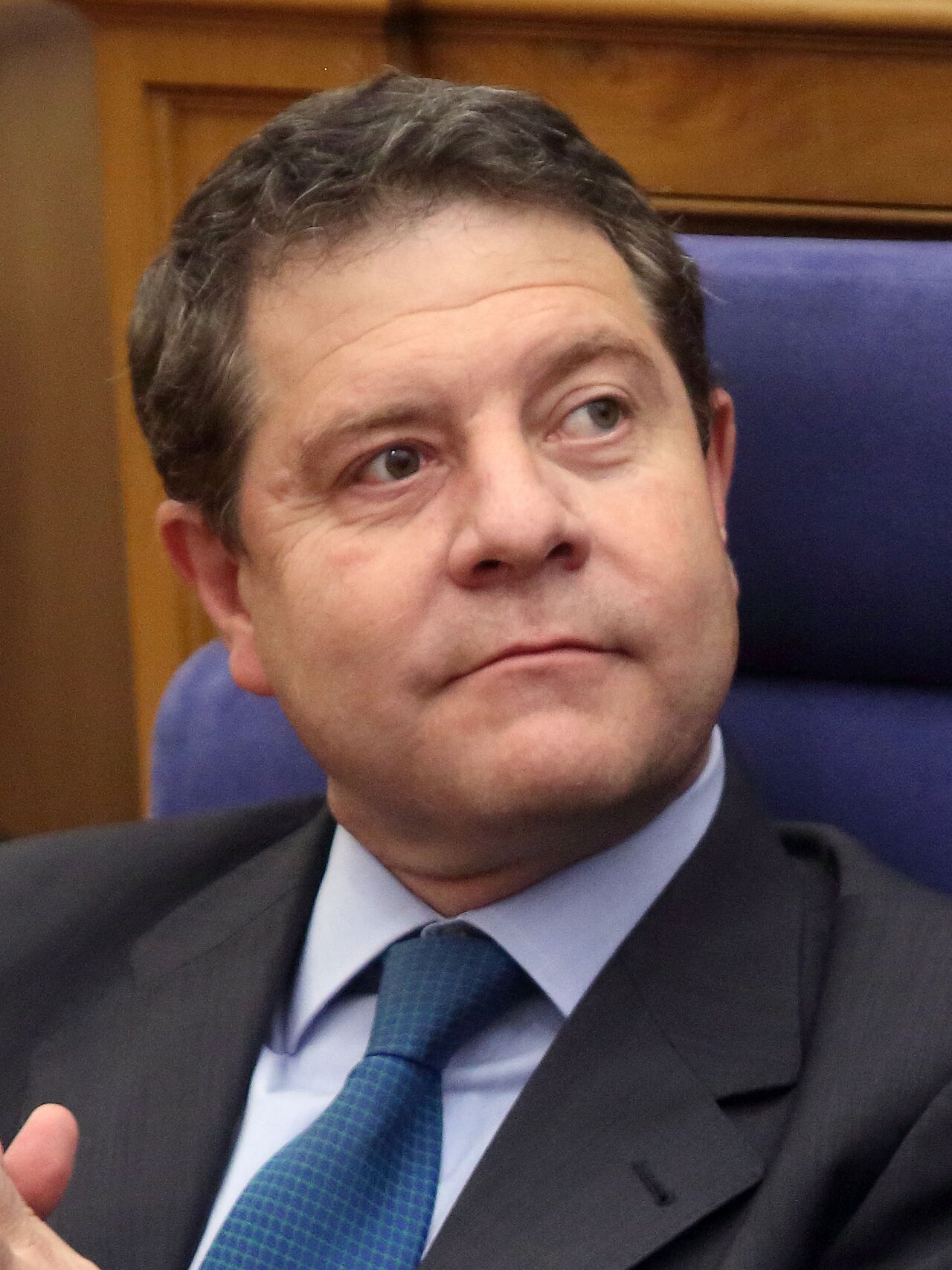
Emiliano García-Page, president of Castilla-La Mancha, at a regional parliament plenary session in Toledo in 2018 (file photo)
Emiliano García-Page, president of Castilla-La Mancha, at a regional parliament plenary session in Toledo in 2018 (file photo). Photo: Gobierno de Castilla-La Mancha (CC BY-SA 2.0, via Wikimedia Commons)
First recordWhat IPR recorded that day. What has happened since is under Updates since the first record.

A Renfe high-speed train ran into the back of a stationary Iryo train near Urda, south of Madrid, on the morning of 28 October 2026. The Castilla-La Mancha regional president said at least 68 people were killed and about 80 injured, and later news reports gave a toll of 69.[1][2][3]

The Transport Minister has blamed an order from the rail control centre after a signalling failure, while a judicial investigation in Orgaz and a technical inquiry continue.[4][2]

The collision

Euronews reported the collision took place at 8:53 am at kilometre 118 of the Madrid to Seville high-speed line. According to the Castilla-La Mancha government, the Renfe train was carrying 397 people and the Iryo train 147.[2][1]

Regional president Emiliano Garcia-Page said at least 68 people were killed and about 80 injured, 50 of them seriously and 15 critically. The regional government said 58 people were receiving hospital treatment. Euronews later reported at least 69 dead and more than 100 injured, and The Objective reported 69 dead on 30 October.[1][4][2][3]

What officials say caused it

Transport Minister Oscar Puente said a computer failure at about 8:30am knocked out LZB, the main signalling system that keeps trains a safe distance apart. He said the crash was caused by what he called an inexplicable order from the central command center and that the train engineers were not to blame.[1][4]

Puente also said he was not attributing responsibility to anyone and was only stating the facts, and that the person who approved the resumption of the AVE's journey had been identified.[4][5]

Citing a ministry reconstruction and recordings published by El Pais, Euronews reported that at 8:48 am the Iryo driver told the Atocha control centre her train remained stationary, and that the AVE was not instructed to stop. Officials have not announced a final cause, and the record so far does not establish who is responsible.[2]

Accounts from the companies and the control centre

Renfe said its train moved as instructed. Sources close to Iryo told the news agency EFE that its train had stopped at a signal and called controllers as the rules require. Sources at Adif told EFE the company had not yet identified the point of failure at its control centre.[1]

Investigation sources quoted by Europa Press said the Adif control centre operator declined to answer Civil Guard questions in the technical inquiry, according to The Objective.[3]

Investigations

Court No. 2 of First Instance and Preliminary Investigation in Orgaz, Toledo, took over the judicial investigation, which is confidential. TodoAlicante reported that the magistrate, Aristea Afroditi Ortiz Tiliakou, forbade removal of material from the track and ordered the train black boxes seized.[6][2]

Al Jazeera reported that the Madrid to Seville line still uses LZB and that Adif was awarded a contract in 2021 to replace it with the European Union standard system, work that is still under way. Rail engineer Jose Luis Gonzalez Vallve told EFE the main system would have prevented the crash had it been working.[1]

Response and disruption

Prime Minister Pedro Sanchez visited the site and declared three days of national mourning. He said it was unacceptable for Spain to suffer two high-speed rail accidents in the same year. CBS News noted he faces a national election on 29 November.[1][4]

Renfe suspended ticket sales on the Madrid to Andalusia high-speed corridor until 13 December.[1]

What the first record did not show

Open questions as of Nov 1, 2026, when IPR first recorded this story. Updates since then may answer some of them.

  • The final death toll.
  • Why the control centre cleared the AVE at normal speed and did not stop it after the Iryo driver's call.
  • Whether anyone will face criminal charges.

The record

Event type
Infrastructure failure or sabotage[1][4]Stated by Oscar Puente, official account, Oct 28, 2026
Means
None[1]
Target type
Transit or aviation[1]
Occurred, start
Oct 28, 2026[2]Stated by Euronews, independent analysis, Oct 29, 2026
First reported
Oct 28, 2026The date of the earliest cited source
Primary place
Urda (site)[1]Stated by Al Jazeera, official account, Oct 29, 2026
State or province
Castilla-La Mancha[1]Stated by Castilla-La Mancha regional government, official account, Oct 28, 2026
Killed
69[7]Stated by Spain's Integrated Data Center (CID), official account, Nov 2, 2026Also stated: at least 68[1], stated by Emiliano Garcia-Page, official account, Oct 28, 2026Also stated: at least 69[2], stated by Euronews, independent analysis, Oct 29, 2026Also stated: 69[3], stated by The Objective, independent analysis, Oct 30, 2026Also stated: 69[15], stated by Castilla-La Mancha emergency services (112), official account, Oct 29, 2026Also stated: 69[16], stated by Associated Press, independent analysis, Nov 10, 2026
Injured
77[15]Stated by Castilla-La Mancha emergency services (112), official account, Oct 28, 2026Also stated: about 80[1], stated by Emiliano Garcia-Page, official account, Oct 28, 2026Also stated: more than 100[2], stated by Euronews, independent analysis, Oct 29, 2026Also stated: more than 200[8], stated by EITB, citing news agencies, independent analysis, Nov 3, 2026
Next expected milestone
Funeral for the 69 victims in Toledo Cathedral[10]Stated by Telecinco, independent analysis, Nov 4, 2026
Next milestone date
Nov 12, 2026[10]Stated by Telecinco, independent analysis, Nov 4, 2026

Each value is what a cited source stated, with its source number. Where sources give different figures, the latest official account is listed first and every other figure is listed with it. A figure for one part of an event, such as one strike in a campaign, is listed as that part and never as the total.

Case and outcome record

DateStageWhoCourt, office or agencyAs the source states it
Oct 28, 2026IncidentToledo province, Castilla-La ManchaAVE collided with the rear of the Iryo train at 8:53 am[2]
Nov 7, 2026Official report or review releasedAITATpreliminary safety report identifying risks in resuming traffic after main safety system failures; recommends provisional line-of-sight running; does not determine causes or responsibility[12][13]

One row per stage for each person, as sources report it. A stage a source only expects is not listed until it happens.

IPR records what each source says and who said it. A cited statement shows that a source said it, not that it is true. Hover a number to see the exact words quoted from that source. See something wrong? Use a flag to report it.

Updates since the first record

State funeral held in Toledo Cathedral for the 69 victims; EU prosecutor's fraud inquiry and Adif chief's resignation reported

A state funeral for the 69 people killed in the Oct. 28 collision was held on Tuesday, Nov. 10, in Toledo Cathedral. The Associated Press reported that relatives of the victims attended, with King Felipe VI and Queen Letizia sitting near the families, and El Constitucional reported that the mass was presided over by the Archbishop of Toledo, Francisco Cerro Chaves. It was the second funeral in Castilla-La Mancha, after one held in a parish church in Urda on Oct. 31, El Constitucional reported. The image of the Most Holy Christ of Vera-Cruz of Urda was brought to the cathedral, leaving the town for the first time in more than 400 years according to El Constitucional, and Urda residents placed 69 candles near the altar, AP reported.[16][17]

El Constitucional reported that Carlos Cuerpo, who took over the Transport portfolio after Oscar Puente resigned, was due to attend for the central government. AP reported that Prime Minister Pedro Sanchez did not attend; it said Sanchez has pledged an investigation and improvements to restore trust in the rail system.[17][16]

AP also reported that Puente's resignation was followed by that of Luis Pedro Marco, head of the railway infrastructure operator Adif, and that the European Union's independent prosecutor said it had opened an investigation into possible fraud in the use of EU funds allocated for safety upgrades and renovations on the line where both of this year's fatal crashes took place. The record does not establish any link between that inquiry and the cause of the Urda collision, which investigators have not yet determined.[16]

Investigators recommend provisional line-of-sight running after signalling failures; causes not yet determined

On Saturday, November 7, 2026, Spain's independent accident investigation authority, AITAT, published a preliminary safety report on the Urda collision, El Debate reported. The report identifies risks in the procedures for resuming rail traffic after a failure of the main safety system, such as the one recorded before the crash.[12]

According to El Debate's account of the report, about twenty minutes before the collision an anomaly caused by loss of transmission was recorded in the LZB system, and the AVE then struck from behind the Iryo train, which was stopped at the entry signal of Urda station. AITAT said that when operation switches to the backup system, the position of trains already on the line must be checked and regularized.[12]

Europa Press reported that AITAT recommended provisionally requiring line-of-sight running on high-speed lines in orders to resume traffic after such an anomaly forces a switch to the BSL backup system. AITAT also asked the State Rail Safety Agency (AESF) and Adif Alta Velocidad to review the protocols of the traffic regulation centres.[13][12]

The report does not yet determine the causes of the collision or establish responsibility, El Debate reported, and AITAT said the provisional measures do not presuppose its final conclusions. elDiario.es had reported on November 2 that AITAT's technical investigation runs in parallel with the confidential judicial investigation, and that the Supreme Court must decide whether to admit a Vox complaint seeking to have Transport Minister Oscar Puente investigated for negligent homicide.[12][13][14]

Official figures from Castilla-La Mancha's emergency service, read for this update, put the injured at 77 on the afternoon of October 28 and record the death toll updated to 69 on October 29; the number still in hospital stood at 29 on November 2. Other counts of the injured differ, as noted in earlier updates. elDiario.es gave the toll of the January crash in Cordoba province as 46.[15][14]

All 69 victims identified; Transport Minister Oscar Puente resigns; Carlos Cuerpo takes over Transport

On 2 November, Spain's Integrated Data Center (CID) confirmed that the provisional death toll remained at 69, including 54 Spanish nationals and 15 foreigners, and authorities said all 69 victims had been identified, CGTN reported. The foreign victims included four Americans, two Australians and two Japanese.[7]

The Castilla-La Mancha regional government said 29 injured people remained in four hospitals, nine of them in intensive care, and regional health authorities said 81 of the 110 patients initially admitted to six hospitals had been discharged, according to CGTN. EITB, citing news agencies, reported on 3 November a wider figure of more than 200 injured of varying severity.[7][8]

The investigating judge, Aristea Afroditi Ortiz, ordered the Toledo Judicial Police to seize and hold the trains' black boxes and, in an order issued on Saturday 31 October, asked for more workers and uninterrupted work to remove the carriages, Moncloa.com reported. The General Council of the Judiciary agreed to reinforce her court so she can work on the case exclusively. EFE, citing Civil Guard sources, reported that all carriages of both trains had been removed from the tracks by 2 November, according to CGTN. On 4 November Telecinco reported that two Iryo carriages had been moved to Renfe's La Sagra maintenance base in Villaseca de la Sagra, that the judge had requested a copy of all control centre conversations with the seven affected trains, and that Spanish investigators had asked the European Railway Agency for technical assistance.[9][7][10]

Telecinco reported that, technically, the trains should have resumed in order of position, the Iryo first and then the AVE, and that the reverse happened, but that it is not clear whether the controller saw the Iryo in the same block section as the AVE when he cleared the AVE to proceed. The record does not yet include black box findings or an official finding on the cause.[10]

On 4 November Sanchez announced that Carlos Cuerpo would temporarily take over the Ministry of Transport, El Diario de Madrid reported. EITB reported that the government's aid decree for victims, modelled on the one approved after Adamuz, doubles the compulsory passenger insurance payouts. Telecinco reported that the funeral for the 69 victims will be held on 12 November in Toledo Cathedral.[11][8][10]

Timeline

Oct 31, 2026First reported
Nov 5, 2026All 69 victims identified; Transport Minister Oscar Puente resigns; Carlos Cuerpo takes...
Nov 8, 2026Investigators recommend provisional line-of-sight running after signalling failures;...
Nov 12, 2026State funeral held in Toledo Cathedral for the 69 victims; EU prosecutor's fraud inquiry...

Who and what is involved

All records
PersonAristea Afroditi Ortiz TiliakouInvestigating judge in the Urda crash
OrganizationCourt of First Instance and Preliminary Investigation No. 2, OrgazLeads the judicial investigation
OrganizationCivil GuardSent a disaster investigation team and questioned control centre staff
PersonLuis Pedro MarcoHead of Spain's railway infrastructure operator; resigned after Oscar Puente
PersonOscar PuenteTransport Minister
OrganizationIntegrated Data Center (CID)Confirmed the provisional death toll
OrganizationAdifasked by AITAT to review traffic regulation centre protocols
PersonFrancisco Cerro ChavesPresided over the funeral mass for the victims
PersonCarlos CuerpoTakes over the Ministry of Transport temporarily after Oscar Puente's...
PersonJose Luis Gonzalez VallveRail engineer quoted by EFE
PlaceToledo CathedralSite of the state funeral for the victims
OrganizationRenfeOperator of the moving AVE train
OrganizationConsejo General del Poder JudicialReinforced the investigating court
OrganizationIryoOperator of the stationary train
PlaceBase de Mantenimiento Integral de La SagraWhere two Iryo carriages are held for the investigation
PersonPedro SanchezPrime Minister
OrganizationAITATconducting the technical investigation of the Urda crash; issued preliminary...
OrganizationEuropean Railway AgencyAsked by Spanish investigators for technical assistance
OrganizationPolicia Judicial de ToledoHolds the trains' black boxes on the judge's order
OrganizationAgencia Estatal de Seguridad Ferroviariaasked by AITAT to review traffic regulation centre protocols
OrganizationVoxfiled a complaint before the Supreme Court seeking to have Oscar Puente...
PersonEmiliano Garcia-PageRegional president
OrganizationEuropean Public Prosecutor's OfficeOpened an investigation into possible fraud in EU funds for safety upgrades on...
PlaceUrdaCrash site between Urda and Los Yebenes