CSIS commentary says Lebanon's push to restore state control has stalled
On November 5, 2026, the Center for Strategic and International Studies (CSIS) published a commentary by Paul Salem arguing that, as Lebanon's leadership nears two years in office, progress toward sovereignty and reform appears stalled. He pointed to unfinished banking reform, limited results from talks with Israel and a pilot zone program covering only three villages.[1]
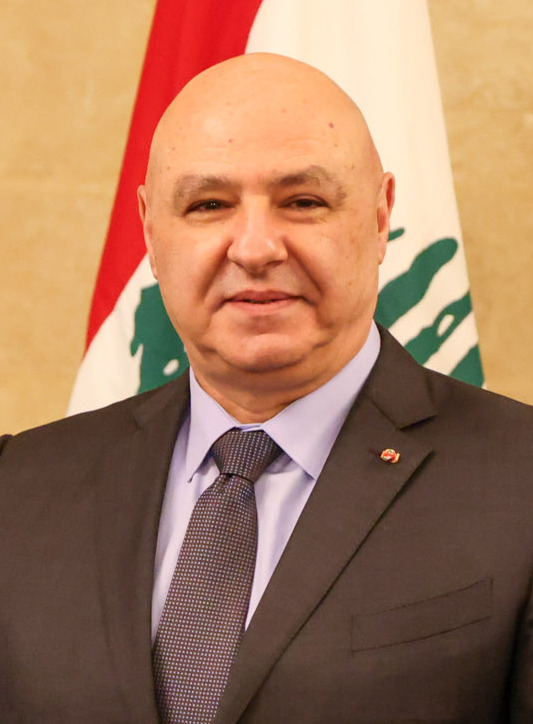
Lebanese officials, in remarks reported by Arab News on November 9, said the state alone must decide on war and peace, while a planned eighth round of talks with Israel has been suspended. The commentary reflects the author's assessment; it does not establish why progress has slowed.[2]
The framework and the pilot zones
Al Jazeera reported that Lebanon, Israel and the United States agreed to a framework on June 26, 2026, after six rounds of face-to-face negotiations. In July, it quoted the US State Department as saying the start of pilot zone operations was a direct outcome of talks in Rome, and reported, citing the department, that the initial phase covered Zawtar al-Gharbiyeh, Froun and Srifa.[3]
Al Jazeera also reported that Hezbollah rejected the agreement and demanded that Israel leave Lebanon unconditionally.[3]
What the commentary says
Salem wrote that the Lebanese Armed Forces began expanding state authority in the south and drew up a phased deployment plan, but renewed war interrupted it. He wrote that banking restructuring and an IMF-supported recovery remain unresolved and that talks with Israel have yet to deliver the security and territorial outcomes Lebanon needs.[1]
He wrote that the first pilot zones covered only three small villages and that no new ones have been agreed. He also wrote that the president, prime minister and parliament speaker are not fully aligned, including on the state's monopoly over force, and that progress requires bolder leadership from Speaker Nabih Berri.[1]
What the commentary proposes
Salem suggested that the president use the November 22 Independence Day occasion for a major national address and propose a three-month emergency initiative to agree on a national rescue and recovery plan. He wrote that legislation needed for an IMF agreement should be adopted by February 2027.[1]
Where things stood in November
Arab News reported on November 9 that a planned eighth round of talks was suspended amid disagreements over Israeli withdrawal, the framework's implementation and verification. It reported that the embassies of the US, UK, Australia, Canada and Japan issued a joint statement backing the Lebanese government and urging parties and MPs to commit publicly to the positions of President Joseph Aoun and Prime Minister Nawaf Salam.[2]
According to Arab News, Salam told a ministerial meeting that the priority was to keep Lebanon from being dragged into another war, and army commander Gen. Rodolphe Haykal called the continued presence of Israeli forces the fundamental problem and primary threat facing the country.[2]
Arab News also reported that Hezbollah MP Ali Fayyad accused the authorities of failing to protect the population or secure the release of occupied land, and that an unnamed source close to Hezbollah said the US midterm results were likely to reduce the chances of new direct talks soon.[2]
The record
- Event type
- Other[1]Stated by Center for Strategic and International Studies, independent analysis, Nov 5, 2026
- Occurred, start
- Nov 5, 2026[1]Stated by Center for Strategic and International Studies, independent analysis, Nov 5, 2026
- First reported
- Jul 20, 2026The date of the earliest cited source
- Primary place
- Lebanon (country)[1]Stated by Paul Salem, independent analysis, Nov 5, 2026
Each value is what a cited source stated, with its source number. Where sources give different figures, the latest official account is listed first and every other figure is listed with it. A figure for one part of an event, such as one strike in a campaign, is listed as that part and never as the total.
IPR records what each source says and who said it. A cited statement shows that a source said it, not that it is true. Hover a number to see the exact words quoted from that source. See something wrong? Use a flag to report it.