Ex-president Yoon Suk-yeol, in custody, is indicted by special counsel for abuse of authority and rejects questioning, after April removal and Lee Jae-myung's June election win
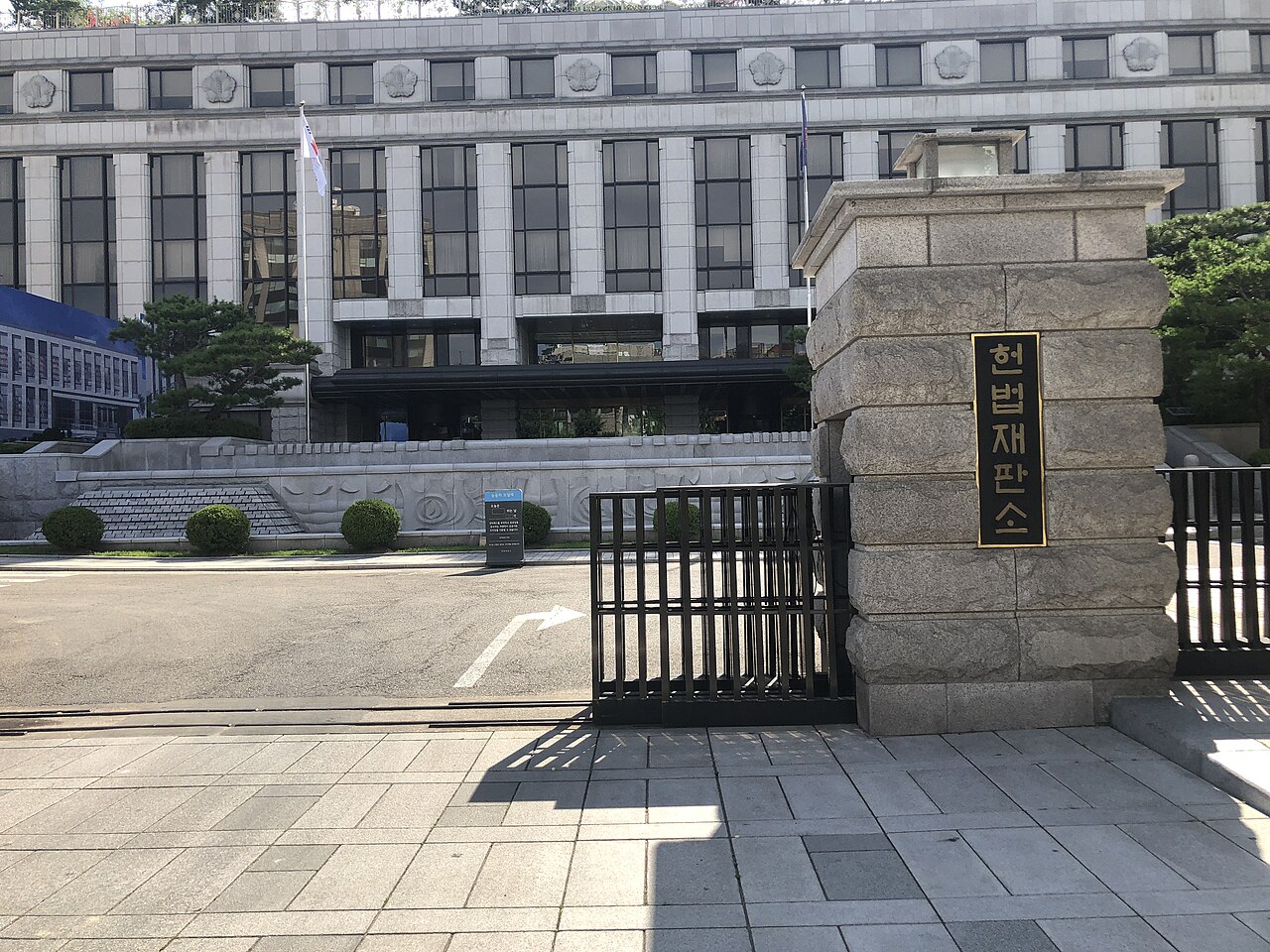
South Korea's Constitutional Court upheld the impeachment of President Yoon Suk-yeol on April 4, 2025, removing him from office over his Dec. 3, 2024 martial law order, according to Human Rights Watch and NBC News. The Korea Herald reports the decision was unanimous, 8-0. AFP and CNN likewise report he was formally removed.[1][2][3][4][5]
In the June 3 election to choose his successor, Al Jazeera, citing National Election Commission data, reports Lee Jae-myung at 49.3 percent and Kim Moon-soo at 41.3 percent with 99.2 percent counted. Kim conceded. Yoon still faces an insurrection trial with no verdict reported, and a separate abuse of power indictment from May. He denies the allegations.[6][7][3]
In the newest reports, Yoon is in custody after Judge Nam Se-jin issued an arrest warrant over concerns he could destroy evidence. The special counsel led by Cho Eun-suk says he did not appear for questioning, and it has indicted him on charges of abuse of authority over the martial law imposition. A court dismissed his request to review the arrest. His lawyers say he has health problems and that the charges overlap with the insurrection case; the Justice Ministry and special counsel dispute the health claims.[8][9][10][11]
The ruling
Korea Pro reported that Acting Chief Justice Moon Hyungbae announced the decision at 11:22 a.m. KST. NBC News reported that all eight judges ruled against Yoon and that the court found him guilty on all counts. Straight Arrow News and the Korea Herald also report the ruling was unanimous. ABC News quotes the court as saying Yoon's acts were a betrayal of people's trust and a denial of the principles of democracy.[12][2][13][3][8]
Korea Pro reported that Yoon is the second South Korean president removed from office, and also that he is the first removed before his term was supposed to end. News On Air also calls him the second, after Park Geun-hye in 2017, and IANS likewise calls him the second president formally removed. The 'first removed before his term ended' wording sits uneasily with the 'second removed' reports, and the record does not resolve that. NBC News reported that Han Duck-soo, who had himself been impeached earlier, resumed as acting president immediately after the ruling.[12][14][15][2]
Yoon Walker of SOAS, writing in The Conversation, says Yoon has been stripped of presidential rights, including staying in the newly built presidential residence. Al Jazeera likewise reports he was stripped of all power and privileges. AFP says he was formally stripped of office after being impeached and suspended by lawmakers, and IANS says the declaration ultimately led to his downfall. CNN describes the declaration as a short-lived power-grab. Al Jazeera reports the martial law order lasted only about six hours before opposition MPs voted it down.[16][17][4][15][5]
What the court said
According to NBC News, the Constitutional Court said Yoon violated the law by sending troops to the National Assembly to stop lawmakers from blocking his order. SAN reports the court found he violated his duty by mobilizing troops and halting parliament. The judges also said that government paralysis and potential election fraud should be resolved through appropriate channels and not by deploying military forces. The sources reviewed report only the unanimous result and a summary of the reasoning, not individual opinions.[2][13]
Reactions to the ruling
Yoon thanked those who supported him and said he was sorry he could not meet their expectations. He also said he would return as one of the people and seek a new path for the country. People Power Party interim leader Kwon Young-se said respecting the decision is the way to uphold democracy and the rule of law. Acting president Han Duck-soo said he would maintain a firm security posture. Democratic Party spokesperson Cho Seung-rae said Yoon did not utter a word of apology. Human Rights Watch's Lina Yoon said the martial law attempt posed a grave threat to human rights and the rule of law. NBC News reported that Yoon's conservative supporters embraced his election fraud rhetoric and said he is being treated unfairly, and Al Jazeera reported that thousands protested his removal.[2][18][1][19]
The June 3 election
The decision cannot be appealed and an election had to be held within 60 days, NBC News reported. News On Air reported the government officially set June 3 and that the new president would take office immediately after the election without a transition team. Han Duck-soo said the government intended to designate June 3 as the 21st presidential election day.[2][14][13][17]
The People Power Party registered former labour minister Kim Moon-soo as its candidate, according to AFP. Al Jazeera's Jack Barton said Kim is seen as a Yoon loyalist. The sources reviewed do not list the other candidates.[4][6]
The National Election Commission data cited by Al Jazeera showed Lee Jae-myung with 49.3 percent and Kim Moon-soo with 41.3 percent when 99.2 percent of votes were counted. Kim conceded and congratulated Lee. The Commission reported turnout of nearly 80 percent, the highest since the 1997 election. The record does not contain a final tally or an inauguration date. The Ministry of Interior and Safety said Lee wanted a simple inauguration so he could focus on state affairs.[6][5]
Al Jazeera reports that Lee described the election as a judgement day against Yoon's martial law and the People Power Party's failure to distance itself from that decision. Park Chan-dae said the results reflected the people's judgement against what he called the insurrection regime; that is his characterization. Lee promised to pursue dialogue and cooperation between Seoul and Pyongyang.[6][5]
Al Jazeera reported earlier that Han Duck-soo, serving as acting president, announced he would resign before an expected entry into the presidential race. The sources reviewed give no date for the resignation and do not say who would then act as president.[17]
Before the vote, Straight Arrow News cited a Gallup poll published April 4 showing Lee leading with 34% support. CNN reports Lee faces several ongoing trials for alleged bribery and charges tied to a property development scandal, and that he was convicted of violating election law in a separate case that has been sent to an appeals court. Lee told CNN he had been indicted without evidence or basis and that the allegations are politically motivated. Unnamed opponents accuse him of being a polarizing figure.[13][5]
Yoon leaves the People Power Party
Yoon announced in a Facebook post on May 17 that he was leaving the People Power Party, according to the record. ANI reports he called on voters to back Kim Moon-soo. He said Korea faces a choice between maintaining liberal democracy or crumbling apart, and asked citizens, especially young people, to stand with his side ahead of June 3. Korea JoongAng Daily states he did not apologize for the martial law or the chaos it caused.[20][21][4]
The insurrection trial
Reports dated April 14 say the trial opened and that Yoon attended. Earlier, SAN had reported that proceedings were set to begin April 14. The Korea Herald reports prosecutors indicted Yoon on January 26 on a charge of leading an insurrection while he was still president. AFP reports he could be sentenced to life in prison or death if convicted. A May 12 AFP report is headlined as Yoon being back in court; the record does not describe what happened. Al Jazeera's June 3 report says he is still facing the trial.[13][3][4][6]
Prosecutors argued that the martial law declaration was unlawful and made it impossible for constitutional institutions to exercise their authority, and that Yoon planned to incite an uprising intending to subvert the constitutional order. They said they presented evidence that he planned martial law in advance and deployed the military to parliament with orders to break windows and cut the power. These are allegations that the court has not ruled on.[22][23]
Yoon told the court that martial law was not a coup d'etat, that he had no intention of paralysing the country, and that it was needed to alert the people to the actions of the majority opposition party. He said the opposition had been stonewalling the government by impeaching more than 20 officials. He argued that calling a short, non-violent event that accepted the National Assembly's request an insurrection is legally unfounded, and asserted that military officials carrying out the order seemed to have overstepped it. CNN reports he cited the Democratic Party's undermining of the budget bill. dpa reports that no evidence has been provided to support his claims about the opposition. Reuters via ABC reports he maintains he declared martial law to sound the alarm over a threat to democracy. AFP via Malay Mail reports he has defended it as necessary to root out pro-North Korean and anti-state forces, while SAN earlier reported the aim as eliminating political rivals; the record does not reconcile the two descriptions.[22][23][5][24][3][25][26][13]
Lawyer Min Kyoung-sic said the first verdict is likely around August but the trial may be extended given about 70,000 pages of evidence. He also said legal experts believe the precedent of the 1979 coup case could be applied. These are his own estimates, not a court schedule.[22][23]
In the newest reports, one of Yoon's lawyers said he would not attend his trial unless the special counsel is removed from the hearings. The prosecution asked the court for a warrant to bring him to trial by force, and the trial court told his lawyers he must submit papers if poor health prevents attendance. The record does not show a decision on the forced-attendance request.[27]
Abuse of power indictment, residence search and the Kim Keon Hee probe
Prosecutors said Yoon was indicted without detention on May 1, 2025 for abuse of power over his martial law declaration, following supplementary investigations during the insurrection trial. The Korea Herald reports the charge alleges obstruction of the exercise of rights under Article 123 of the Criminal Act. AFP reports he has denied wrongdoing in separate cases involving his wife, a shaman and the party nomination process.[7][3]
The Korea Times reports prosecutors searched Yoon's private Seoul residence on April 30. AFP reports a raid the day after the indictment as part of a bribery probe involving his wife and a shaman. The two reports differ on the date, and the record does not say what the search found. The warrant, as quoted by JoongAng Daily, said Jeon Seong-bae and another individual gave gifts to a public official's spouse between April and August 2022. Prosecutors allege a former Unification Church official gave Jeon a diamond necklace and handbag meant as gifts for Kim Keon Hee, and Jeon is said to have testified that he lost the necklace. JoongAng Daily reports Jeon is under scrutiny for allegedly influencing personnel decisions in the presidential office.[28][4][29]
Yoon's lawyer Kim Gye-ri called Kim Keon Hee a witness, not a suspect, and called the search a public shaming; a Democratic Party spokesperson said prosecutors must investigate all allegations. Later IANS reports describe charges against Kim Keon Hee under the Public Official Election Act and the Political Funds Act, and say she told prosecutors she could not comply with a summons. IANS also reports, without naming a source, that prosecutors were considering a detention warrant. The Democratic Party claimed a threat of public revelation over a 2022 nomination pressured Yoon into martial law; that is its claim.[28][29][15]
Former defence minister Kim Yong-hyun
Special counsel Cho Eun-suk said he indicted Kim Yong-hyun on charges including obstruction of official duties and abetting destruction of evidence linked to the martial law. The indictment alleges Kim deceived the Presidential Security Service on Dec. 2 to obtain a secure phone he later gave to Noh Sang-won, and instructed an aide on Dec. 5 to destroy documents. Kim has been under arrest since Dec. 27 and is on trial for insurrection. The special counsel asked the court to consolidate the charges, cancel the bail decision and issue a new detention warrant. Kim's lawyers called the indictments illegal and said the special counsel lacked authority to indict during the preparation period. Reuters via ABC reported the Seoul Central District Court extended his detention over concerns about destruction of evidence. Kim denies wrongdoing.[30][25]
Special counsel summonses and the arrest warrant
Yonhap reported the special counsel began operations after the National Assembly passed a bill in early June mandating an independent investigation. Cho is one of three counsels appointed by President Lee Jae Myung. Reuters via ABC reported Yoon was arrested in January and released after 52 days on technical grounds. Officials said police summoned him on June 5, 12 and 19 and he ignored all three. Yonhap reported he was questioned later, and the special counsel said it was checking whether he abused his power and over his alleged orders to block his arrest and delete records from secure phones. These are allegations, and his legal team said his failure to appear on July 1 was not a refusal to comply. [k15.c15 is not relied on here][30][31][25][32][33][34][35][36]
The special counsel filed for a detention warrant at 5:20 p.m. on July 6, citing a need for more questioning on abuse of power, special obstruction of public duty and false public document allegations. Park Ji-young said treason and a Pyongyang drone allegation were left out because they are still under investigation. Yoon's lawyers argued no crime can be established and that he holds no authority. The Seoul Central District Court's Judge Nam Se-jin issued the warrant over concerns about destroying evidence. Prosecutors have labelled the martial law attempt an attempted rebellion, and Yoon denies the charges.[37][38][26][8][39]
In custody: refused questioning, health claims and new indictment
Assistant Special Counsel Park Ji-young said Yoon did not appear for questioning and no formal notice of absence was submitted. She said the right to remain silent does not include refusing to appear while in custody, and the team asked the Seoul Detention Center to bring him in. Yoon's representatives said he has diabetes and eye diseases and that detention worsened his health; lawyer Yoo Jung-hwa said his liver is in bad shape. The Justice Ministry disputed the mistreatment claims, and the special counsel said correctional authorities identified no specific health issues. Yoon also refused Corruption Investigation Office questioning, arguing it lacked jurisdiction.[9][11]
The Seoul Central District Court dismissed Yoon's request to review the arrest as without reason. His lawyers argued the five charges on the warrant were already covered by the insurrection charge, and the special counsel argued he should stay in custody because the charges were serious. The special counsel then indicted Yoon on charges of abuse of authority over his martial law imposition. Park alleged he notified only some Cabinet members, infringing their constitutional right to deliberate and vote. The team also alleges he altered the declaration to make it look as if Han and Kim signed it after the Assembly voted to lift it, and ordered deletion of records from encrypted phones. Park said the treason charge was left out because it is still under review, and that the team indicted without further questioning of Yoon because it had enough evidence from other figures. The special counsel also summoned security service officials over the allegation that Yoon told them to block a warrant's execution in January. All of this is allegation, and Yoon denies wrongdoing.[11][10][9]
Other voices
Yoon Walker writes that Yoon's supporters see him as the victim of a political establishment overrun by communists, while others favoured his removal. Pastor Jeon Kwang-hoon rejected the ruling and urged followers to resist, while Jeon Han-gil said he respected it. Al Jazeera reports experts say right-wing YouTubers and extreme religious figures backing Yoon used misinformation to court support. Jean H. Lee of the East-West Center called the moment a watershed, and Leif-Eric Easley described national fatigue after a long legal process. Pro-Yoon supporter Park Jong-hwan said he believes South Korea is finished.[16][19][2]
The record
- Event type
- Other[13]Stated by Yoon Suk Yeol (as reported by Straight Arrow News), official account, Dec 3, 2024
- Occurred, start
- Dec 3, 2024[13]Stated by Yoon Suk Yeol (as reported by Straight Arrow News), official account, Dec 3, 2024
- First reported
- Apr 4, 2025The date of the earliest cited source
- Primary place
- National Assembly (site)[2]Stated by Constitutional Court of Korea, official account, Apr 4, 2025
- Next expected milestone
- First verdict in the insurrection trial, expected around August (not a scheduled date)[22]Stated by Min Kyoung-sic, independent analysis, Apr 14, 2025
Each value is what a cited source stated, with its source number. Where sources give different figures, the latest official account is listed first and every other figure is listed with it. A figure for one part of an event, such as one strike in a campaign, is listed as that part and never as the total.
Case and outcome record
| Date | Stage | Who | Court, office or agency | As the source states it |
|---|---|---|---|---|
| Dec 3, 2024 | Incident | Yoon Suk-yeol | Declared martial law and deployed troops, as reported by Straight Arrow News[13] | |
| Apr 4, 2025 | Official report or review released | Yoon Suk-yeol | Constitutional Court unanimously upheld the impeachment and removed him from office[1][3] | |
| Apr 14, 2025 | Trial begins | Yoon Suk-yeol | Insurrection trial proceedings set to begin April 14; prosecutors made arguments at proceedings reported April 14[13][22] | |
| May 1, 2025 | Indictment | Yoon Suk-yeol | Indicted without detention for abuse of power over his martial law declaration, prosecutors said[7][4] | |
| Jun 19, 2025 | Indictment | Kim Yong-hyun | Indicted by special counsel on charges including obstruction of official duties and abetting destruction of evidence linked to the December 3 martial law[30] | |
| Jun 25, 2025 | Charges dropped or case dismissed | Yoon Suk-yeol | Seoul Central District Court dismissed the special counsel's detention warrant request because Yoon expressed willingness to comply with the summons[31] | |
| Jul 10, 2025 | Arrest or detention | Yoon Suk-yeol | Seoul Central District Court, Judge Nam Se-jin, issued an arrest warrant over concerns he could destroy evidence[8][26] | |
| Jul 18, 2025 | Charges dropped or case dismissed | Yoon Suk-yeol | Seoul Central District Court dismissed Yoon's request to review the arrest as without reason[11] | |
| Jul 19, 2025 | Charges filed | Yoon Suk-yeol | Special counsel indicted him on charges of abuse of authority over his martial law imposition[10] | |
| Date not stated | Arrest or detention | Yoon Suk-yeol | Detained on Jan. 15 at the presidential residence, the first sitting South Korean president to be arrested (year not stated in the claims). Released after 52 days by a Seoul district court on procedural or technical grounds.[2][33][25] | |
| Date not stated | Arrest or detention | Kim Yong-hyun | Under arrest since December 27 (year not stated in the report)[30] | |
| Date not stated | Charges filed | Kim Keon-hee | Faces charges under the Public Official Election Act and the Political Funds Act, per IANS[15] | |
| Date not stated | Indictment | Yoon Suk-yeol | Indicted on January 26 on a charge of leading an insurrection while still president (year not stated in the claim)[3] | |
| Date not stated | Plea entered | Yoon Suk-yeol | Denied all allegations at two April hearings and said the martial law declaration was a message to the public, not an insurrection[3] | |
| Date not stated | Trial begins | Kim Yong-hyun | Standing trial on insurrection charges, per an IANS report[30] | |
| Date not stated | Verdict | Lee Jae-myung | Convicted of violating election law in a separate case, which has been sent to an appeals court, per CNN[5] |
One row per stage for each person, as sources report it. A stage a source only expects is not listed until it happens.
IPR records what each source says and who said it. A cited statement shows that a source said it, not that it is true. Hover a number to see the exact words quoted from that source. See something wrong? Use a flag to report it.