Hoax bomb threats disrupt dozens of flights across Europe in early November 2026
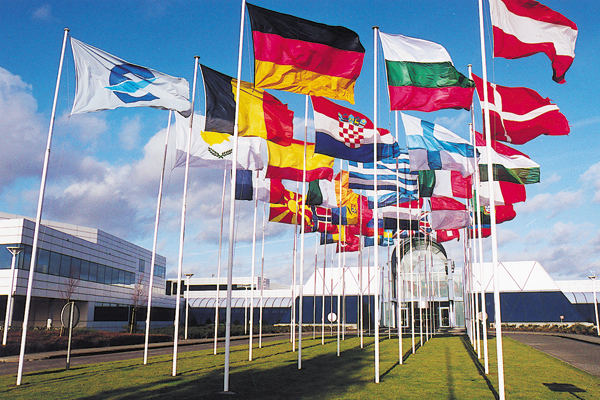
Hoax bomb threats disrupted at least 34 flights across Europe in the week beginning November 2, 2026, with some aircraft forced into emergency landings or diversions, The Guardian reported. All the flights landed safely and searches found nothing suspicious.[1]
Several European investigations are under way. Officials and outlets have given differing views on whether the threats are linked or directed by a state, and no one has been publicly identified as responsible.[1][2]
The threats, day by day
TIME reported that the threats arrived almost daily by anonymous calls and emails beginning November 2, when a Wizz Air flight from London to Bulgaria was diverted after a mid-flight bomb threat and made an emergency landing in Budapest. On Tuesday, November 3, seven planes across Europe were searched or diverted after malicious alerts, according to The Guardian.[2][1]
On Thursday, November 5, at least 25 threats affected flights between 16 countries, including Italy, Ireland, the United Kingdom, Spain and Bulgaria, The Guardian reported. The Metropolitan Police said threats had been made against four aircraft arriving at or departing from Heathrow, and a Cork airport spokesperson confirmed a phoned threat that delayed a flight. La Sicilia reported that an Aer Lingus flight from Dublin to Rome was diverted to the French military base at Evreux, Normandy, under escort by French fighter jets.[1][3]
According to Eurocontrol, cited by The Guardian, the affected flights were a tiny fraction of the 27,400 flights scheduled in Europe that day. TIME reported that on Friday, November 6, an emailed warning claimed bombs had been planted at several European broadcasters, forcing evacuations at outlets including Sky News, Bulgaria's Nova TV and Ireland's RTE.[1][2]
Investigations
The Guardian reported that investigators said on November 5 there was still no evidence the hoaxes were being directed by a hostile terror group or a state actor. EU Transport Commissioner Apostolos Tzitzikostas condemned the threats and said he had activated EU-level aviation security information-sharing mechanisms, TIME reported.[1][2]
La Sicilia reported that in Italy the Air Border Police and the Postal Police were handling checks with reports going to prosecutors, and that international cooperation channels were activated to trace the servers the emails passed through. TIME, citing Agence France-Presse, reported that French prosecutors are investigating whether foreign powers are connected.[3][2]
Who is behind it: differing accounts
Government officials have described the threats in different terms. The Irish government said it seemed likely that this was a coordinated campaign of disruption, and Spanish Foreign Minister Jose Manuel Albares called the threats an attempt at hybrid aggression and psychological warfare, according to TIME. Italian Defence Minister Guido Crosetto was quoted by The Guardian as grouping recent incidents, from refrigerators to French blood supplies to the fake alarms, and saying someone has an interest in stoking tensions.[2][1]
The Guardian reported, citing sources at Aeroporti di Roma and a text seen by AFP, that threat emails sent to airports in Rome and Sofia were signed by "fighters of the Male State", the name of a Russian movement. The Guardian reported that its founder, Vladislav Pozdnyakov, did not comment on or claim the threats on his Telegram channel; TIME, citing AFP, later reported that he denied any involvement and said the movement had not existed since 2021, and that no link has been confirmed.[1][2]
No authority has publicly attributed the threats to any person, group or state. The signature on some emails shows only the name the senders used, not who sent them.[1][2]
Industry and expert reaction
IATA's Nick Careen said in a statement quoted by The Guardian that safety is the industry's top priority and all threats are taken seriously. Rhys Jones, an analyst at Osprey Flight Solutions, told The Guardian the threats seemed linked but formed a reasonably chaotic campaign with no particular region targeted.[1]
What the first record did not show
Open questions as of Nov 8, 2026, when IPR first recorded this story. Updates since then may answer some of them.
- Who sent the threats.
- Whether the flight threats and the broadcaster threats share an origin.
- Whether any arrests will follow.
The record
- Event type
- Threat or hoax[6]Stated by Greek City Times, reporting what Apostolos Tzitzikostas said, official account, Nov 11, 2026How this type is defined: Evaluating and Responding to Violent Extremist Hoax Threats
- Means
- None[1]
- Target type
- Transit or aviation, Media[1][2][6]
- Occurred, start
- Nov 2, 2026 (range)[2]Stated by TIME, investigative finding, Nov 7, 2026
- Occurred, end
- Nov 6, 2026[6]Stated by Greek City Times, investigative finding, Nov 12, 2026
- First reported
- Nov 5, 2026The date of the earliest cited source
- Primary place
- Europe (region)[1]Stated by The Guardian, investigative finding, Nov 5, 2026
Each value is what a cited source stated, with its source number. Where sources give different figures, the latest official account is listed first and every other figure is listed with it. A figure for one part of an event, such as one strike in a campaign, is listed as that part and never as the total.
Case and outcome record
| Date | Stage | Who | Court, office or agency | As the source states it |
|---|---|---|---|---|
| Nov 5, 2026 | Incident | multiple European countries | at least 25 bomb threats affected flights on Thursday; all landed safely and searches found nothing suspicious[1] | |
| Date not stated | Arrest or detention | not disclosed (some cities, per the EU Transport Commissioner) | Arrests have already been made in some cities[6] |
One row per stage for each person, as sources report it. A stage a source only expects is not listed until it happens.
IPR records what each source says and who said it. A cited statement shows that a source said it, not that it is true. Hover a number to see the exact words quoted from that source. See something wrong? Use a flag to report it.