Germany and Romania attribute sabotage incidents to Russia; Moscow denies
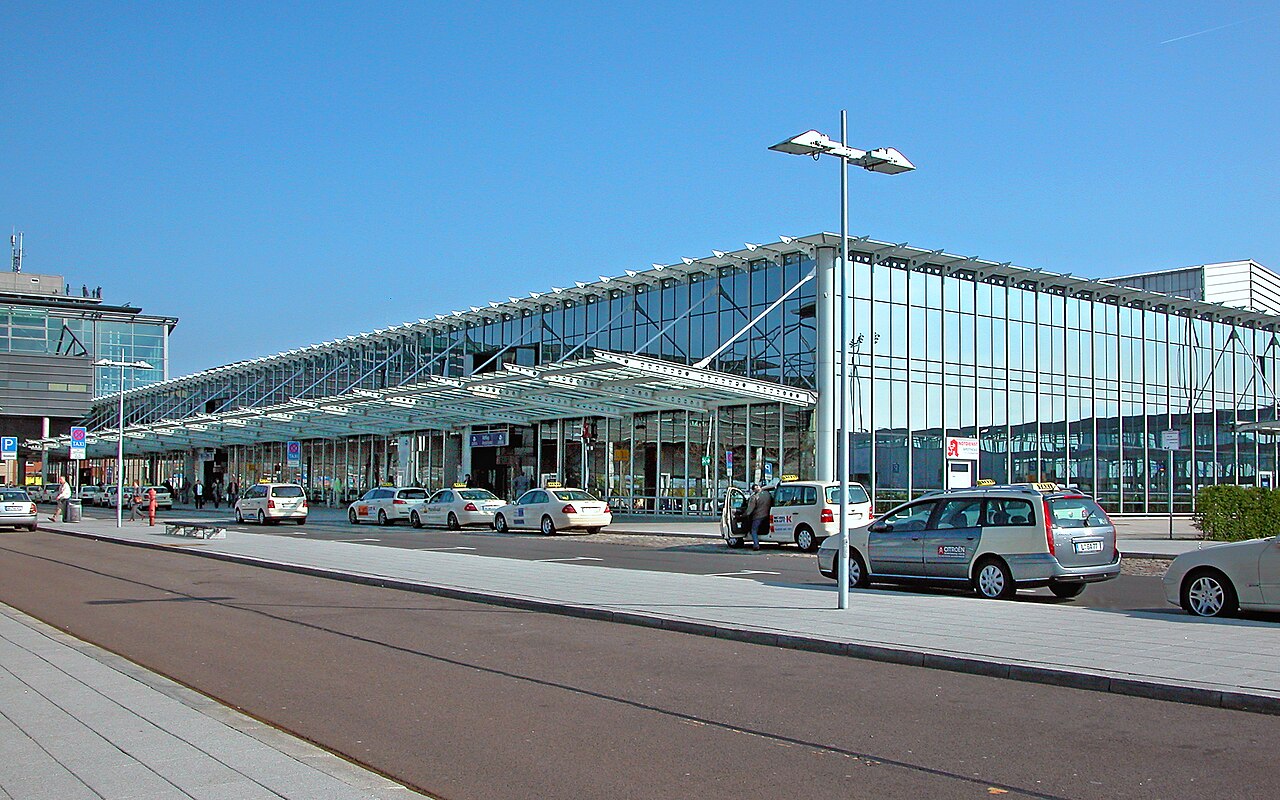
European governments have attributed a series of sabotage incidents in 2026 to Russia. Germany's government said on September 2 that it had concluded Russia was responsible for the attempted attack at Leipzig/Halle Airport, and Romania's Intelligence Service said a September fire in Brasov was part of a sabotage campaign coordinated by Russia, Al Jazeera reported. Russia's embassy in Germany and President Vladimir Putin rejected Germany's accusations, according to Politis.[1][2][3]
The Leipzig/Halle Airport drone
MDR reported that late on August 4 an airport employee found a drone fitted with explosives and a detonating device at Leipzig/Halle Airport, lying near Ukrainian Antonov cargo aircraft. A further drone and explosives were found at the airport at the end of August in the course of the investigation, MDR reported.[4]
Germany's attribution and Moscow's response
Deputy government spokesperson Meyer said on September 2 that the federal government had concluded Russia was responsible for the hybrid attack in Leipzig, and that it was closing the Russian consulate general in Bonn and the Russian House in Berlin. He said attribution rested on three dimensions, the pattern of the act, police investigations and intelligence findings, and declined to give names or details, saying it would be negligent while investigations continue.[1]
Russia rejects the accusations, MDR reported. Politis reported that the Russian Embassy in Germany called them unfounded and absurd and that Putin described them as a staged provocation. Al Jazeera wrote that the operation was later verified by the European Commission as Russian; the underlying EU statement has not yet been read for this record. Germany has not made its evidence public, and no court has ruled on responsibility.[4][3][5]
Munich arson near defence companies
BR24 reported, citing the Munich general prosecutor and Bavarian criminal police, that around midnight in early September incendiary devices were thrown from a moving car onto a construction site in front of the Rohde & Schwarz headquarters in Munich. An investigating judge issued arrest warrants for two suspects, whom the prosecutor accuses of property damage and attempted arson.[6]
BR24 reported that it had not been clarified whether the companies were the target, while investigators and Bavarian Interior Minister Joachim Herrmann assumed a political motive. Al Jazeera later reported, citing the Frankfurter Allgemeine Zeitung, that Russia had planted incendiary devices in the offices of Rohde & Schwarz and Helsing; this is a second-hand account that the cited prosecutor statements do not confirm.[6][5]
Romania and the wider pattern
Al Jazeera reported on October 27 that Romania's Intelligence Service said the September 14 fire in Brasov was part of a wider campaign of sabotage operations coordinated by Russia. Romania's DIICOT said three people were involved, two of whom were remanded in custody in Germany while the third remains at large in Poland, according to the same report. Moscow has repeatedly denied such accusations, Al Jazeera reported.[2]
Other accounts point to a broader pattern. Latvia's ambassador to Greece told Al Jazeera that masked individuals crossed into Latvian territory and carried out deliberate sabotage, and Al Jazeera reported that representatives of five EU intelligence agencies told the Financial Times that Russia was seeking to kill European defence bosses. These are statements and reports, not findings by a court.[5]
What the first record did not show
Open questions as of Nov 7, 2026, when IPR first recorded this story. Updates since then may answer some of them.
- The evidence behind Germany's attribution has not been made public.
- Whether the Munich defence companies were the intended target.
- The identity of the possible further Leipzig suspect and whether anyone has been charged in the Leipzig case.
The record
- Event type
- Infrastructure failure or sabotage[1][2]Stated by German Federal Government; Romanian Intelligence Service, official account, Oct 27, 2026
- Means
- Drone, Explosive or IED, Arson or incendiary[6][4]
- Target type
- Transit or aviation, Other[6][4]
- Occurred, start
- Aug 4, 2026 (range)[4]Stated by MDR, investigative finding, Nov 6, 2026
- First reported
- Sep 2, 2026The date of the earliest cited source
- Primary place
- Europe (region)[5][2]Stated by Al Jazeera, independent analysis, Oct 29, 2026
Each value is what a cited source stated, with its source number. Where sources give different figures, the latest official account is listed first and every other figure is listed with it. A figure for one part of an event, such as one strike in a campaign, is listed as that part and never as the total.
Case and outcome record
| Date | Stage | Who | Court, office or agency | As the source states it |
|---|---|---|---|---|
| Aug 4, 2026 | Incident | Leipzig/Halle Airport | drone fitted with explosives and a detonating device found by an airport employee[4] | |
| Sep 2, 2026 | Official report or review released | German Federal Government | government concluded Russia was responsible for the hybrid attack in Leipzig[1] | |
| Sep 4, 2026approximate | Arrest or detention | Munich General Prosecutor's Office | arrest warrants issued for two suspects accused of property damage and attempted arson[6] | |
| Oct 27, 2026approximate | Official report or review released | Romanian Intelligence Service | Brasov fire described as part of a wider sabotage campaign coordinated by Russia[2] | |
| Nov 10, 2026 | Charges filed | National Prosecutor's Office, Poland | espionage and sabotage on behalf of foreign intelligence (two Ukrainian citizens)[7] | |
| Nov 12, 2026 | Indictment | Volodymyr B. | National Prosecutor's Office, Poland | espionage, sabotage and causing the risk of a major transport accident[8] |
| Date not stated | Suspect identified publicly | BKA | two suspects identified in the Leipzig case[4] |
One row per stage for each person, as sources report it. A stage a source only expects is not listed until it happens.
IPR records what each source says and who said it. A cited statement shows that a source said it, not that it is true. Hover a number to see the exact words quoted from that source. See something wrong? Use a flag to report it.