Today: Mon Nov 16, 2026MethodologyCorrectionsSource policyAboutResearch Desk
Home › Iran Regional Confrontation › Iran says four tankers caught fire after hitting mines in...
Iran Regional ConfrontationDeveloping

Iran says four tankers caught fire after hitting mines in the Strait of Hormuz; vessels not identified
Compiled by IPR17 sources62 attributed claimsUpdated Nov 14, 2026
Report a problem
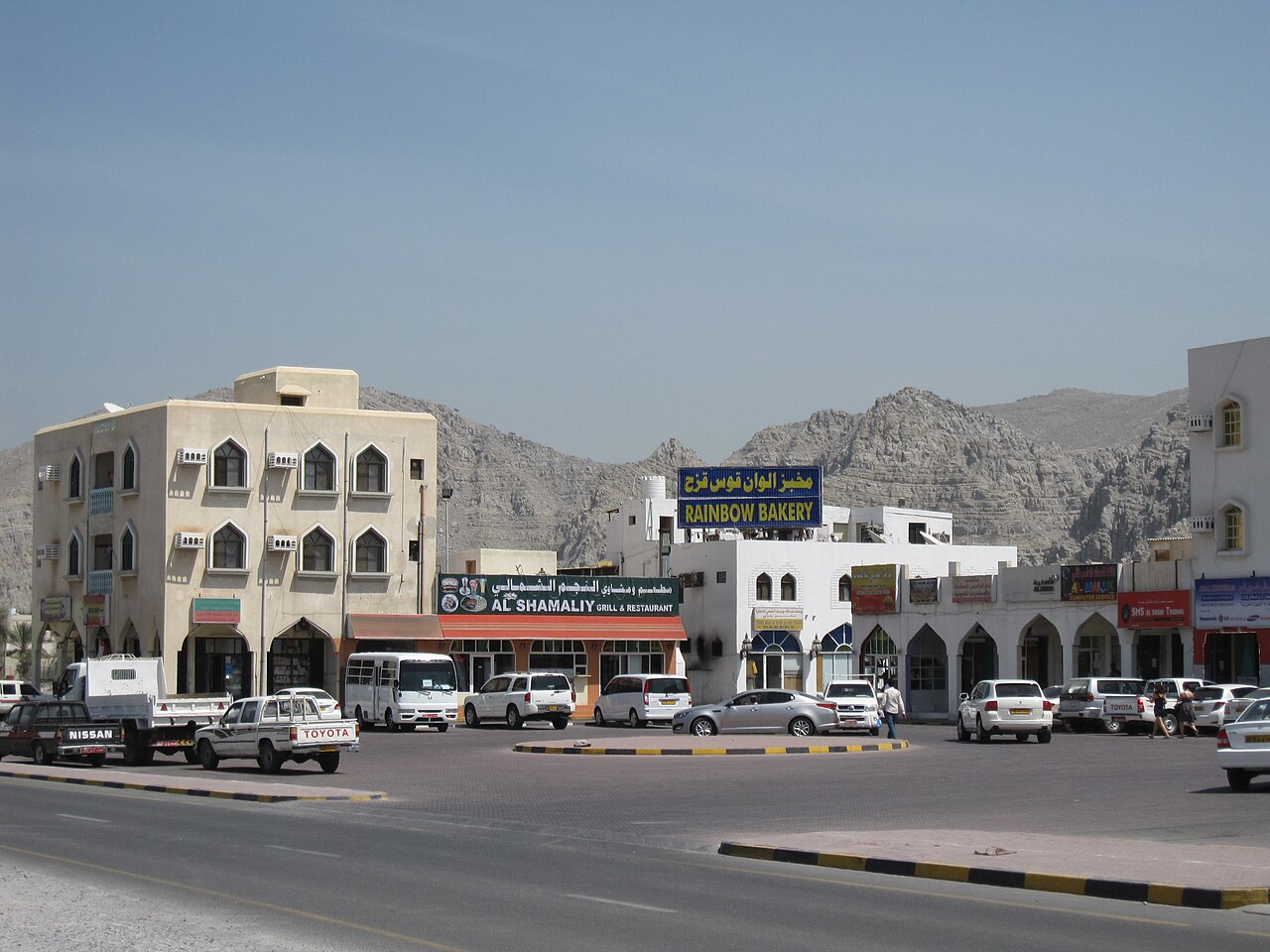
Central souk area of Khasab, Oman (file photo, date unknown)
Central souk area of Khasab, Oman (file photo, date unknown). Photo: Jc8136 (CC BY-SA 3.0, via Wikimedia Commons)
First recordWhat IPR recorded that day. What has happened since is under Updates since the first record.

On 29 October Iran's Islamic Revolutionary Guard Corps said three oil tankers had exploded and caught fire after striking mines on what it calls the unauthorised southern route of the Strait of Hormuz, and Iran's army later reported a fourth tanker on fire east of the strait. AFP reported that it was not immediately clear when the incidents occurred or which flags the tankers were flying.[1]

The same day the UK Maritime Trade Operations (UKMTO) reported a tanker attacked near Khasab, Oman, by a small boat that attached two explosive devices to its hull. The record does not establish that this tanker is one of the vessels Iran described, or that mines caused the fires Iran reported.[1][2]

Iran's account

The IRGC said the first three vessels had switched off their radar and navigation systems and ignored warnings from its navy, and that the unauthorised route through the strait is mined. IRGC spokesman Hossein Mohebi challenged the US statement that the strait had been demined, writing that it should be proven with independent evidence.[1]

AFP reported that Iran's statement came a day after the US military said it had cleared key routes through the waterway, and that US Central Command had reaffirmed that all mines in primary transit routes have been cleared. Reuters said it could not independently verify the IRGC's claims, gCaptain reported.[1][2]

Incidents reported by maritime agencies on 29 October

UKMTO said it had received a report of a vessel on fire about 25 nautical miles northeast of Khasab. According to UKMTO Warning 187-26, as reported by gCaptain, a small boat approached the tanker's port side and attached two explosive devices above the waterline, and UKMTO said the blasts caused an engine room fire that temporarily disabled the vessel. UKMTO later confirmed the crew was safe, the fire was out and there was no environmental impact.[1][2]

Martin Kelly of EOS Risk Group identified the vessel as the LOUISE 1, and maritime security sources described the explosives as limpet mines, gCaptain reported. In a separate warning, UKMTO reported that another tanker was struck by an unidentified projectile while leaving the strait.[2]

Earlier that day the EU's Maritime Security Centre Indian Ocean issued an alert saying the master of a merchant vessel had reportedly seen another vessel on fire about nine nautical miles north of Khasab. gCaptain reported that regional authorities later identified that vessel as a dhow, which according to UKMTO caught fire, listed and sank after its crew was evacuated.[3][2]

Earlier claims and US denials

The 29 October statements followed a series of similar Iranian claims. After a 31 August claim, US Central Command said no ships had hit mines in the Strait of Hormuz, and in an 18 October advisory the Joint Maritime Information Center said IRGC Navy claims that two supertankers struck mines on 17 October were unsubstantiated, gCaptain reported.[4]

Further claims in early November

The Maritime Executive reported that on 3 November the IRGC Navy claimed three more oil tankers had exploded after striking sea mines, and IranWire reported that in a statement early on 4 November the IRGC said four oil tankers had hit naval mines in the southern section of the strait. The Maritime Executive reported that UKMTO said it received details of only one attack late on 3 November. IranWire reported that US Central Command has repeatedly dismissed Iranian reports of ships hitting naval mines as inaccurate.[5][6]

What the first record did not show

Open questions as of Nov 5, 2026, when IPR first recorded this story. Updates since then may answer some of them.

  • The names and flags of the four tankers Iran described.
  • When the incidents Iran described took place.
  • Whether any mine was involved in the incidents Iran described.

The record

Event type
Attack[2]Stated by UKMTO, official account, Oct 29, 2026
Means
Explosive or IED[1][2]
Target type
Other[1]
Occurred, start
Oct 29, 2026 (approximate)[1]Stated by Islamic Revolutionary Guard Corps (IRGC), official account, Oct 29, 2026
First reported
Oct 20, 2026The date of the earliest cited source
Primary place
Strait of Hormuz (region)[1]Stated by Islamic Revolutionary Guard Corps (IRGC), official account, Oct 29, 2026

Each value is what a cited source stated, with its source number. Where sources give different figures, the latest official account is listed first and every other figure is listed with it. A figure for one part of an event, such as one strike in a campaign, is listed as that part and never as the total.

IPR records what each source says and who said it. A cited statement shows that a source said it, not that it is true. Hover a number to see the exact words quoted from that source. See something wrong? Use a flag to report it.
Updates since the first record

IRGC claims more tankers hit on 12 November and a gas carrier on 13 November; accounts differ on the count and vessels remain unidentified

On 12 November, Reuters, in a report carried by Deccan Herald, said the IRGC reported two oil tankers disabled by explosions in the Strait of Hormuz, and that Iranian state media showed what it said was video footage of the incidents. OilPrice.com reported the same day's announcement differently, saying the Iranian military said four oil tankers were hit by explosions, and that Tehran said the tankers had ignored Iranian warnings and entered restricted areas of the strait. The sources read do not settle how many vessels Iran described.[15][16]

On 13 November, the IRGC Navy said a gas carrier struck a mine. OilPrice.com reported the IRGC Navy as saying a tanker carrying liquefied gas hit a mine and exploded while using a route Iran has not authorized, while Middle East Eye reported the IRGC Navy as describing the vessel as a liquefied petroleum gas (LPG) carrier. In a statement quoted by Middle East Eye, the IRGC claimed the ship chose to pass with the support of American fighter jets, and warned that vessels using what it called unauthorised and dangerous routes would suffer the same fate as previous vessels.[16][17]

As with earlier claims, no source read in this window names the vessels, their flags or owners, or reports crew casualties, and no response from US Central Command or UKMTO to the 12 and 13 November claims was found. The record shows what Iran said; it does not establish that the incidents happened as described.[15][16][17]

IRGC claims three more tankers hit on 10 November; UKMTO and others report separate attacks the same day

IranWire reported that the IRGC Navy announced on 10 November that two oil tankers had explosions and fires on what it calls an unauthorized passage in the Strait of Hormuz. According to the IRGC, one, described as a supertanker, struck a sea mine, and the second caught fire while attempting a covert transit with the support of US fighter jets; both had disabled their navigation systems and were abandoned off the southern coast. IranWire said the tankers' identities, flags, crew status and damage could not be independently verified.[11]

Later the same day the IRGC Navy said on Telegram that a third tanker using a route not authorized by Iran had struck a mine, and TASS reported the IRGC said it was on fire in the eastern part of the strait. TASS reported the IRGC said tankers were increasingly trying unauthorized routes after US radar and coastal navigation equipment on the southern side was destroyed; IranWire reported that Fars News Agency had quoted an IRGC Navy official on 9 November claiming those navigation aids were destroyed. No US or independent confirmation of the fighter jet escort or the destruction of navigation aids was found.[12][11]

Anadolu Agency reported that UKMTO said on 10 November that a tanker was struck by an unidentified projectile about 19 nautical miles northeast of Limah, Oman, with the crew safe, and late that day, citing military authorities, that another tanker was involved in an incident in the strait; that warning did not identify the vessel or the nature of the incident.[13]

Gulf News reported that India's shipping minister Sarbananda Sonowal said four crew were injured when the Liberia-flagged supertanker Fujairah Energy was hit by a projectile in the Arabian Gulf on 10 November, and that ADNOC Logistics and Services confirmed one of its vessels was damaged in an attack in UAE waters the same afternoon. The record does not establish whether any of these vessels are among those Iran described as hitting mines.[14]

IRGC claims two more tankers hit mines on 6 November and two more on 7 November; vessels still unidentified and claims unverified

On 6 November the IRGC Navy's public relations office announced, according to IranWire, that two oil tankers caught fire after striking sea mines near the Strait of Hormuz, one east of the strait and the second inside the waterway. Iran International reported that the IRGC Navy said both vessels had switched off their navigation and identification systems, and that the IRGC accused the United States of supporting the tankers' attempts to use the routes it calls unauthorized.[7][8]

Greek City Times reported that late on 7 November the IRGC, as carried by Iranian state television, announced that two additional tankers had struck sea mines and were severely damaged and unable to continue sailing, and that Iranian authorities claim the explosions cracked the vessels' hulls. The outlet presented these as separate from the 6 November claim; the record does not yet include the primary IRGC text for either announcement.[9]

Neither announcement identified the vessels. IranWire reported that their identities and flag states were not disclosed and that the details had not been independently verified, and Greek City Times reported that no confirmation from UKMTO or US Central Command was immediately available. IranWire reported that CENTCOM had said in November that the primary shipping lanes remained clear of sea mines, and wrote that it was unclear whether the alleged locations fall along those routes.[7][9]

Separately, gCaptain reported on 2 November that a Joint Maritime Information Center advisory of 1 November named two tankers attacked near Khasab, Oman, on 29 October: the Panama-flagged RITI, struck by an unidentified projectile, whose 25 crew members the Royal Navy of Oman said it evacuated, and LOUISE 1, attacked about 25 nautical miles northeast of Khasab. JMIC recorded 18 confirmed attacks in the strait since 6 October as of 1 November. The record does not establish whether either vessel is among those Iran described as hitting mines.[10]

Timeline

Oct 31, 2026First reported
Nov 8, 2026IRGC claims two more tankers hit mines on 6 November and two more on 7 November; vessels...
Nov 11, 2026IRGC claims three more tankers hit on 10 November; UKMTO and others report separate...
Nov 14, 2026IRGC claims more tankers hit on 12 November and a gas carrier on 13 November; accounts...

What the record does not show yet

  • Killed: no cited source states it
  • Injured: no cited source states it