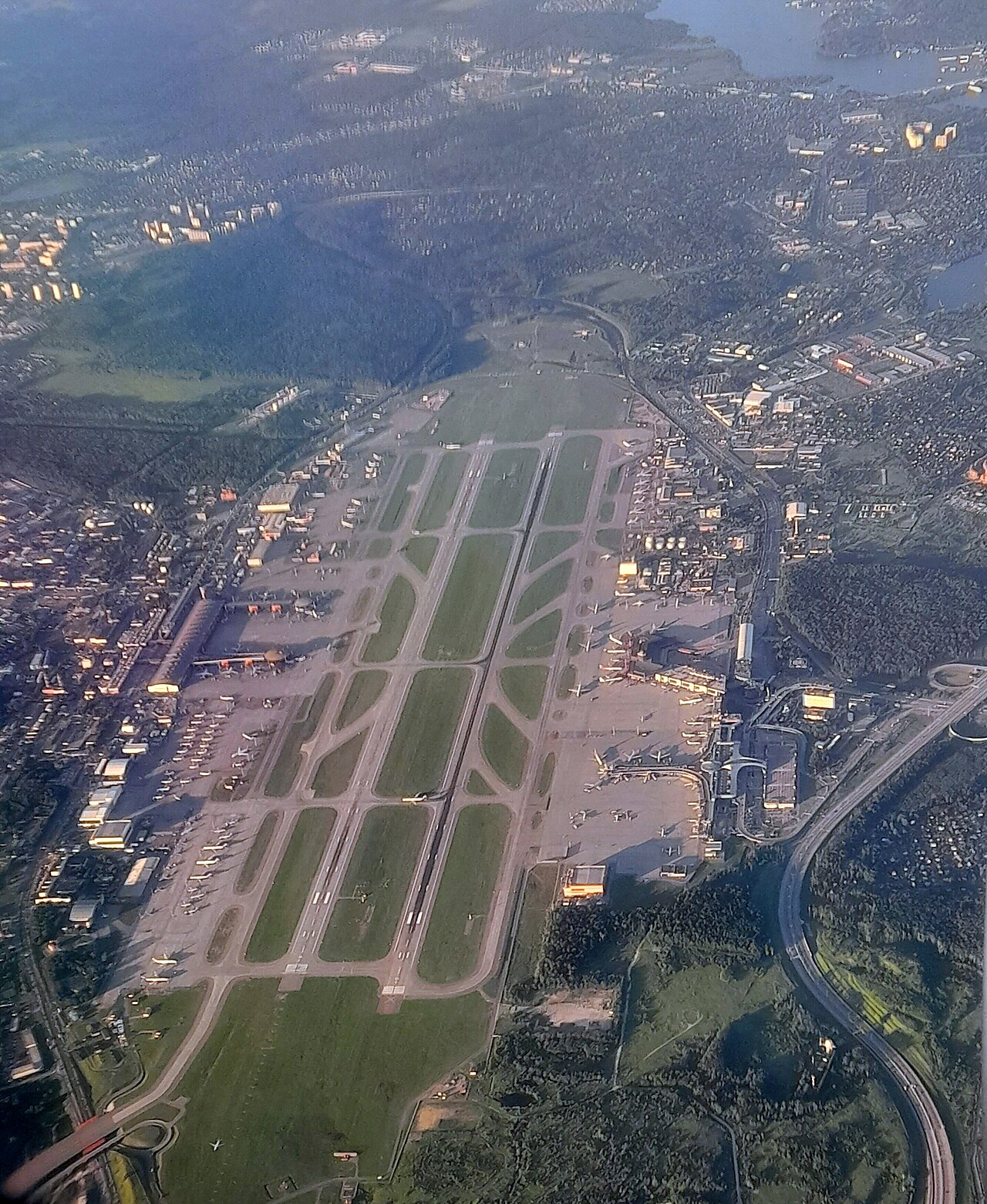
Ukraine's Navy says Neptune missiles destroyed two Russian Su-34s at Marinovka airfield
Ukraine's Navy reported on October 29, 2026, that it destroyed two Russian Su-34 fighter-bomber jets in a strike on the Marinovka military airfield in Russia's Volgograd Oblast using domestically produced Neptune missiles, the Kyiv Independent reported. According to the Navy, the aircraft were destroyed at the base of Russia's 11th Mixed Aviation Regiment near the settlement of Oktyabrsky. The Navy did not provide visual confirmation, and the Kyiv Independent said it could not independently verify the claim.[1]
Later that day President Volodymyr Zelensky said in his evening address that Ukraine had carried out two missile strikes, destroying two Russian Su-34s and also hitting an Iskander launcher, Interfax-Ukraine reported. Russia has not publicly confirmed any losses at the base, Defence Blog reported on October 30, when open-source analysts published satellite imagery they said showed the wreckage of two Su-34s.[1][2][3]
What Ukraine said
The Ukrainian Navy's press service said two Russian Su-34 fighter-bombers were destroyed as a result of a missile strike by a Neptune coastal missile system on the aircraft's location at Marinovka airfield in Russia's Volgograd region, Interfax-Ukraine reported. Defence Blog reported that the Navy said its units hit the base near the settlement of Oktyabrsky with a coastal Neptune missile system.[2][3]
In his evening address, Zelensky thanked the forces for the result. Ukrainska Pravda reported that he did not mention the location of the strike on the Russian missile launcher and that he confirmed the destruction of two Su-34 fighter-bombers. Ukraine has not said how many Neptune missiles it fired at Marinovka or whether other aircraft at the base were damaged, Defence Blog reported.[2][4][3]
Satellite imagery
RBC-Ukraine reported on October 30 that, according to the Telegram channel CyberBoroshno, satellite imagery from Marinovka airfield confirmed that Russian Su-34 fighter-bombers were there when Ukrainian Neptune missiles struck. Open-source intelligence analysts said the image shows impact sites at two parking areas where Su-34 aircraft were stationed, and a Sentinel satellite image from October 28 shows Su-34 aircraft at the same location, indicating it is their usual parking area, the outlet reported. CyberBoroshno said this confirms that the strike hit the aircraft's designated parking areas rather than random spots at the airfield.[5]
Defence Blog reported that open-source analysts said satellite imagery shows the wreckage of two Su-34 fighter-bombers destroyed at the base, that CyberBoroshno said the post-strike image shows hits in two parking spaces with the remains of the aircraft visible, and that the Russian aviation-focused account Avivector also published satellite frames showing the destroyed aircraft. NASA's FIRMS fire-detection system picked up a fire at the airfield on the night of the attack, and the base lies more than 400 km from Ukrainian-controlled territory, the outlet reported. Russia has not publicly confirmed any losses at the base, Defence Blog said.[3]
Russia's Su-34 fleet, as Ukraine counts it
Ukraine's military intelligence agency HUR reported on October 29 that Russia had approximately 140 Su-34 fighter-bombers of various modifications in service as of October 22, and that Russia has lost 43 Su-34 aircraft destroyed and another seven damaged since the start of its full-scale invasion, the Kyiv Independent reported. HUR estimated that Russia can manufacture approximately 14 to 18 Su-34 aircraft a year, according to the same report. Defence Blog described the Su-34 as the main aircraft Russia uses to drop glide bombs, known in Ukraine as KABs, on Ukrainian cities, frontline positions and the troops holding them.[1][3]
Earlier strikes on Su-34 bases
The Kyiv Independent reported that the Marinovka strike followed an October 15 attack on the Borisoglebsk military airfield in Russia's Voronezh Oblast that destroyed four Su-34M bomber jets and damaged two more. RBC-Ukraine, describing the same October 15 attack in the Voronezh region, reported that it destroyed six Su-34M bombers. Defence Blog reported that Marinovka itself had been hit before, when Ukrainian drones struck the base in June 2025 and Ukraine's General Staff said four Su-34s and a maintenance area were hit.[1][5][3]
What the first record did not show
Open questions as of Nov 5, 2026, when IPR first recorded this story. Updates since then may answer some of them.
- Russia's account of the night of October 29 at Marinovka.
- How many missiles were fired and whether other aircraft were damaged.
- Whether anyone was killed or injured at the airfield.
- Where the Iskander launcher Zelensky mentioned was hit.
The record
- Event type
- Attack[1][2]Stated by Ukrainian Navy, as reported by the Kyiv Independent, official account, Oct 29, 2026
- Means
- Explosive or IED[1][2]
- Target type
- Law enforcement or military[1]
- Occurred, start
- Oct 29, 2026[1][3]Stated by Ukrainian Navy, as reported by the Kyiv Independent, official account, Oct 29, 2026
- First reported
- Oct 29, 2026The date of the earliest cited source
- Primary place
- Marinovka air base (site)[1]Stated by Ukrainian Navy, as reported by the Kyiv Independent, official account, Oct 29, 2026
- State or province
- Volgograd Oblast[1]Stated by Ukrainian Navy, as reported by the Kyiv Independent, official account, Oct 29, 2026
Each value is what a cited source stated, with its source number. Where sources give different figures, the latest official account is listed first and every other figure is listed with it. A figure for one part of an event, such as one strike in a campaign, is listed as that part and never as the total.
Case and outcome record
| Date | Stage | Who | Court, office or agency | As the source states it |
|---|---|---|---|---|
| Oct 29, 2026 | Incident | Ukrainian Navy (statement) | Neptune coastal missile strike on Marinovka airfield; two Russian Su-34 fighter-bombers destroyed, according to the Ukrainian Navy; Russia has not publicly confirmed losses[1][3][2] |
One row per stage for each person, as sources report it. A stage a source only expects is not listed until it happens.
IPR records what each source says and who said it. A cited statement shows that a source said it, not that it is true. Hover a number to see the exact words quoted from that source. See something wrong? Use a flag to report it.