Today: Mon Nov 16, 2026MethodologyCorrectionsSource policyAboutResearch Desk
Home › Iran Nuclear Program and Sanctions › Gulf states and mediators pursue proposals to avert a...
Iran Nuclear Program and SanctionsDeveloping

Gulf states and mediators pursue proposals to avert a renewed US-Iran war
Compiled by IPR9 sources63 attributed claimsUpdated Nov 12, 2026
Report a problem
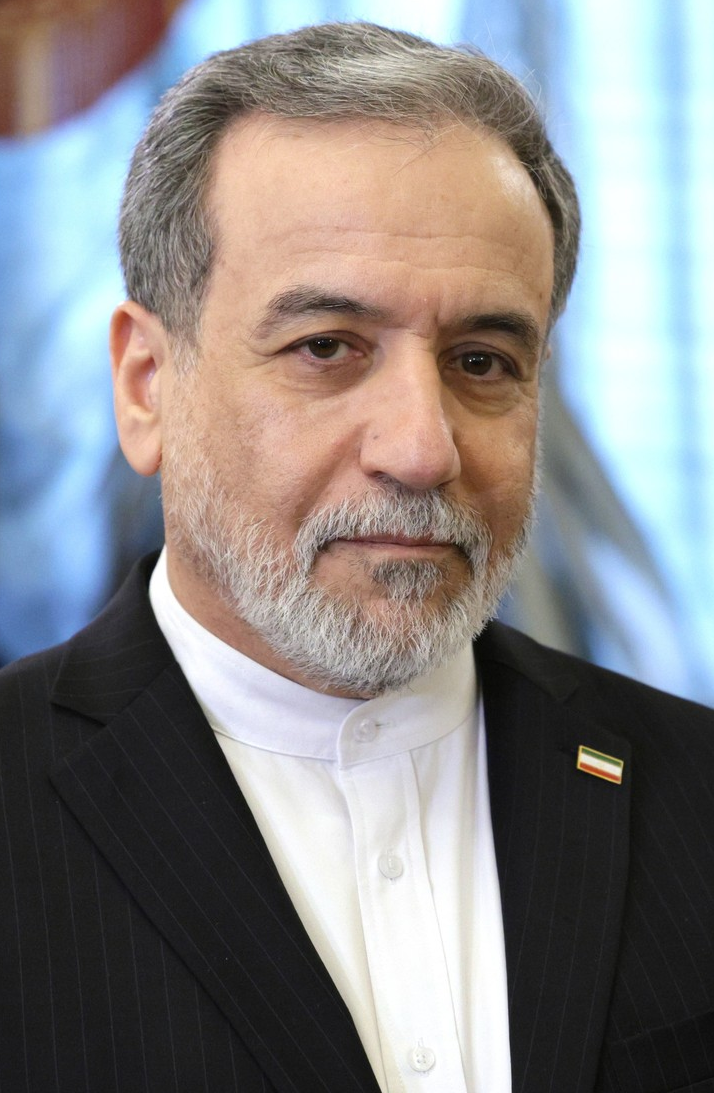
Abbas Araghchi, Iranian Minister of Foreign Affairs, meeting with Russian President Vladimir Putin (file photo, date not stated in file)
Abbas Araghchi, Iranian Minister of Foreign Affairs, meeting with Russian President Vladimir Putin (file photo, date not stated in file). Photo: kremlin.ru (CC BY 4.0, via Wikimedia Commons)
First recordWhat IPR recorded that day. What has happened since is under Updates since the first record.

In late October 2026, Gulf states pursued proposals to avert a renewal of the war between Iran and the United States, centered on reopening the Strait of Hormuz in return for lifting sanctions on Iran and on a longer-term regional security arrangement. Qatar's foreign ministry said on November 3 that it continues to facilitate the exchange of proposals between Washington and Tehran, but that it was not possible at that moment to speak of any specific breakthrough.[1][2]

Background to the mediation

Reuters reported that earlier mediation to end the war, which the US and Israel launched on February 28, 2026, helped produce an interim peace agreement in June that quickly unravelled, and that Qatar, along with Pakistan, has led mediation since.[3]

Oman's call for a regional pact

On October 26, Oman's foreign minister, Badr Albusaidi, said in a lecture at Girton College, Cambridge, that what is needed is a new and inclusive security framework involving all eight Gulf littoral states, and that a non-aggression pact between all eight should be the goal. He said a 1976 summit in Muscat was the first and last time all eight had met around one table, and that this aspiration was part of what was at stake in the talks between Iran and the United States.[4]

Albusaidi told the Guardian there is general acceptance that this will be the direction of travel once a deal is in place. Iran's foreign minister, Abbas Araghchi, said at a televised event in Iran that there had been talk of a new war but he was already thinking about the postwar period.[1]

The proposals and the disputed Qatari draft

The Guardian reported on October 28 that a multipronged deal to reopen the Strait of Hormuz within four days of sanctions being lifted, and for the Houthis to withdraw substantial forces inside Yemen, is at the heart of Gulf states' plans, and that Ali Bagheri of Iran's national security council said Iran was willing to reduce its proposed reopening period from seven days to four. The newspaper reported that the US is holding out for a concession that European powers suggest could involve readmitting UN weapons inspectors, which British Foreign Secretary Ed Miliband urged on Araghchi in New York and which Iran has so far refused. A delegation from Saudi Arabia, Turkey and Pakistan also travelled to Tehran to discuss Saudi terms for ending the Yemen conflict.[1]

Accounts differ on what Qatar offered. Reuters reported that an official briefed on the negotiations, who is not from Iran, said Qatari mediators presented Iran with a new draft deal on Sunday, October 25, setting a seven-day timeline of daily confidence-building steps for each side, with several countries acting as guarantors and a response expected by the end of the week. A senior Iranian official involved in the talks told Reuters that Qatar had presented only unacceptable ideas and not an offer.[3]

Araghchi said on October 28 that Tehran remained in close contact with intermediaries to review ideas that could ensure implementation of Iran's own seven-day proposal, according to Reuters, which reported that Iran's conditions include an end to the US blockade of Iranian ports and the lifting of sanctions on its oil exports.[3]

Qatar's account in November

Qatar's foreign ministry spokesperson, Majed Al Ansari, said on November 3 that a Qatari delegation had traveled to Tehran on Monday, November 2, and held a meeting with counterparts lasting about three hours, and that the efforts are carried out in full coordination with regional partners, particularly the GCC member states. He said it was not possible at that moment to speak of any specific breakthrough.[2]

On November 5, Qatar's foreign ministry said Prime Minister and Foreign Minister Sheikh Mohammed bin Abdulrahman Al-Thani, in a call with Araghchi, stressed Qatar's support for initiatives to secure freedom of navigation and a comprehensive agreement that helps deliver lasting peace. No source reviewed reports an agreed settlement.[5]

What the first record did not show

Open questions as of Nov 7, 2026, when IPR first recorded this story. Updates since then may answer some of them.

  • Whether Iran formally answered the Qatari draft.
  • What the United States has said about the Gulf proposals.
  • What changed after November 5, 2026.

The record

Event type
Official action or statement[2]Stated by Qatar Ministry of Foreign Affairs, official account, Nov 3, 2026
Means
None[2]
Target type
Other[2]
Occurred, start
Oct 25, 2026 (range)[3]Stated by Reuters, reporting what an official briefed on the negotiations said, investigative finding, Oct 29, 2026
Occurred, end
Nov 9, 2026[7]Stated by Iran International, official account, Nov 10, 2026Also stated: 2026-11-05[5], stated by Qatar Ministry of Foreign Affairs, official account, Nov 5, 2026
First reported
Oct 26, 2026The date of the earliest cited source
Primary place
Gulf region (region)[4]Stated by Badr Albusaidi, official account, Oct 26, 2026
Next expected milestone
Possible Vance-Rezaei meeting in Qatar, reported by Türkiye newspaper citing Ibrahim Kalin and denied by an unnamed Iranian official via Tasnim[7]Stated by Ibrahim Kalin, official account, Nov 9, 2026

Each value is what a cited source stated, with its source number. Where sources give different figures, the latest official account is listed first and every other figure is listed with it. A figure for one part of an event, such as one strike in a campaign, is listed as that part and never as the total.

IPR records what each source says and who said it. A cited statement shows that a source said it, not that it is true. Hover a number to see the exact words quoted from that source. See something wrong? Use a flag to report it.
Updates since the first record

Qatar reports progress after White House meeting; Iran's security chief denies any talks are under way (November 10)

Qatar's foreign ministry said on November 10 that it had seen progress in talks between the US and Iran, a day after Prime Minister Sheikh Mohammed bin Abdulrahman Al Thani met President Trump. Ibrahim bin Sultan Al Hashmi of the ministry told the weekly briefing in Doha that the White House meeting was held in a positive atmosphere and that both sides were making positive statements about a diplomatic solution, but that it could not be said how close or how far away an agreement is. Anadolu reported that Qatar said it had received positive responses from both Washington and Tehran. Sheikh Mohammed then joined ministers from Saudi Arabia, France, Britain, Germany and Italy in Paris on the sidelines of a G7 meeting, Euronews reported.[8][9]

On the US side, Euronews reported that Trump said Gulf states including Qatar and Saudi Arabia had urged him to hold off on fresh strikes, and that he would do so for now while keeping the naval blockade in place. Anadolu reported that Secretary of State Marco Rubio said after the G7 meeting that Washington saw no need to resume major combat operations because economic pressure was working, and warned that US forces remained ready to respond if Iran crossed US red lines.[8][9]

Iran's account differs. Supreme National Security Council Secretary Mohsen Rezaei said in a television interview, as reported by Anadolu citing Tasnim, that Iran is not currently conducting any negotiations with the Americans, and that the Strait of Hormuz would remain closed until all seven of Iran's conditions are fully implemented. He also said Iran had communicated its conditions and that the initial US response was insufficient and deceptive. Rezaei and Foreign Minister Abbas Araghchi both denied reports of a planned Rezaei meeting with Vice President JD Vance, with Araghchi saying Tehran's two-day proposal remained on the table.[9]

Qatari prime minister meets Trump as Iran and the US set out differing terms (November 8 to 10)

Al Jazeera reported that Iran offered the US a new nuclear and peace proposal through Qatari mediators on November 5, to be discussed only after Washington meets Tehran's seven demands. Foreign Ministry spokesperson Esmaeil Baghaei said that if the United States meets Iran's demands, security will return to the region within two days, and Iran International reported that he described the plan as a shortened version of Iran's earlier seven-day plan, with Qatar and Pakistan in regular contact with both sides. Foreign Minister Abbas Araghchi said on November 8 that mediators had been inactive for several days after the US midterm elections and that Tehran was awaiting Washington's response.[6][7]

On the US side, Secretary of State Marco Rubio said on November 8 that he would not say the sides were at the verge of a breakthrough, and called some Iranian demands outrageous, ridiculous and not realistic. Trump warned the same day that Washington had identified additional targets in Iran should military action resume.[6]

On November 9 Qatari Prime Minister Sheikh Mohammed bin Abdulrahman Al Thani held closed-door talks with Trump at the White House, in what Iran International described as an effort to secure more time for diplomacy. Sheikh Mohammed said the US had the willingness to take steps towards a solution, and afterwards wrote that he was grateful for positive discussions on reaching a deal. Trump told reporters that Iran, militarily, is effectively over and that the US was keeping the status quo; Iran International reported that he also wrote that Qatar, Saudi Arabia, the UAE, Bahrain and Kuwait favored maintaining the status quo. No statement from those governments confirming that was found.[6][7]

According to Axios, as reported by Iran International, Trump told Al Thani he wanted an agreement and was willing to give negotiations a chance, and the two-day plan under discussion would have Washington first lift its naval blockade and release some frozen funds while Tehran invites UN inspectors to damaged nuclear sites.[7]

Iranian accounts diverged. Supreme National Security Council secretary Mohsen Rezaei wrote that the US should stop manufacturing fake news about imaginary talks and demanded acceptance of Iran's seven conditions. Turkish intelligence chief Ibrahim Kalin said, according to Türkiye newspaper, that Vice President JD Vance and Rezaei were scheduled to meet in Qatar the following week, and that the main disagreement was over which side would act first; the Tasnim news agency cited an unnamed senior Iranian security official denying that such a meeting was planned.[7]

Iran International also reported that Turkish President Recep Tayyip Erdogan said he told Trump Ankara opposed another round of attacks on Iran, and that the United Arab Emirates warned a comprehensive settlement remained difficult.[7]

Timeline

Oct 31, 2026First reported
Nov 10, 2026Qatari prime minister meets Trump as Iran and the US set out differing terms (November 8...
Nov 12, 2026Qatar reports progress after White House meeting; Iran's security chief denies any talks...